Showing posts with label cooking. Show all posts

Wednesday, December 11, 2013

Pectin

Pectin, a bio polymer
 of (among other constituents) 
D-galacturonic acid,
shown here in a powder form.
www.iherb.com 
     Pectin is a fiber found in plants, extracted from citrus fruits, and is used in food as a gelling agent particularly in jams and jellies.  Also, pectin is used by people for high cholesterol, high triglycerides, and to prevent colon cancer, it is also used for diabetes.  

But, you must know, I sing the praise of pectin as a thickening agent for jams and jellies!  aaaaaAAAAhhhh! did you hear the angels sing, or, was that just me?


     Pectin is now readily available at the grocers in it's modern tech rendered form as a dry powder.  It was only available in it's liquid form for jam and jelly making when I was a kid, but we made our own or only made jellies that were high in pectin and therefore thickened on it's own.  


http://www.neatlysmart.com
IMG_2295.JPG
http://www.instructables.com
    To make your own pectin, you must render a large amount of fruit, peels and all, by boiling in water until the fruit just about falls apart.  It's a mush mess!  After rendering, you strain the fruit mush through a cheesecloth draped over a strainer or a jelly strainer for $6- $11.  

    When making your own pectin, you can use a citrus fruit like oranges or lemons which will render a lot of pectin as it contains about 30% in the peels.  But, and there is a good one to know here, BUT, oranges and lemons have a distinct flavor that should be taken into account, it could change the flavor of your jam.  An orange pectin would blend well in pineapple or orange marmalade.  Apples contain a lot less pectin, by volume (1.5%) but, the flavor is easily blended into stronger fruits, so you will have a true grape flavor in the jam, not a lemon-grape.  


     After all the trouble of making your own pectin, jar it.  Seal it in a sterilized jar (simmering temp or 185 degrees for 15 minutes)and date it.  Pectin will keep jarred for about four months.  


    To use the pectin, 2/3 cup liquid pectin equals one packet of distilled dry pectin.  Write that down inside your cookbook in the margins of the jelly making recipes.  Even if you never forget, the next generation needs to know what you know, Make a note, then make jam!

Thursday, October 31, 2013

How to improve on... FIRE!

    The control over fire has been key to the survival of mankind.  Able to gather embers, preserve and transport them to keep the home fires burning, mankind was able to cook food, defend the home and advance in ways the beasts of the field could not.  

    Fire safety was probably close to the next major invention for mankind.  Even to this day, no one really wants to walk through fire, so a stone circle or hole for a fire pit was created to contain the fire.  Stone circles kept children out of the flames.  Later, building a stone floor to place the fire on to create a hearth, made a safer upgrade for the fireplace.  The draw back was the stones were cold.  They did not keep the warmth and release it back into the room through the night.  


www.roomzaar.com 
     As mankind evolved, or civilized, and fire came indoors it was pretty much the status quo for centuries.  Sure, fireplaces and braziers were developed to keep people from walking through the flames on the way to the door, but fire was pretty standard until Colonial American days.  This photo, left, shows the finest fireplace available to the Colonial American.  It was designed to function as a cook place, a heat source and a gathering center for the home.  Lucky was the child who found his sleeping place in the loft in the winter, but Woe be to he who had no place to sleep but above the fire in the summer!  Some improvement was needed.


franklinstove
http://www.ushistory.org/franklin/info/inventions.htm
     Enter, Benjamin Franklin!  Yes, Benjamin Franklin and the Franklin stove took the fire out of the exterior wall and placed it in the center of the room.  He designed a fireplace of wrought iron to contain the fire, absorb the heat and redirect it into the room.  His design of adding baffles to allow for air flow through the back allowed for a hotter fire with less fuel.

      
     We are more familiar with the image of the potbellied stove or the cook stove and we think that is all it was, a stove.  IT was a fireplace.  It was the new, improved fire.  
      IT's improvement over the basic Franklin  stove is the ability to vent to smoke from the fire up and out of the home.  This invention, as much as the basic control over fire, has improved the life of mankind by taking smoke out of the lungs and out of the home.  Cigarettes are not the only source of secondhand smoke.  
www.bbqguys.com 

     Most of us have the rudimentary parts of Franklin's grand design.  Ever wonder what that flange on the side of the charcoal grill was for?  It's Franklin's air baffle!  

     So, fire is hot.  And having fire is good, but improving on fire for safety and use of less fuel for the same job is better.  Should cooking over an open fire become necessary, Add ingenuity to the chore for safety, quality and security.  

www.amazon.co.uk 
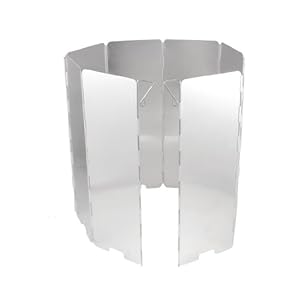
     You can use the top of a charcoal grill as a wind break, a fire wall, a fire cover when cooking over coals, redirect the heat.  Aluminum flashing works as well.  Most any wind screen will improve the fire over just two hot sticks!  

Plan your meals.  Cook red meat over flames as you turn the spit, simmer stews and coffee over coals when the flames die down.  Hang meat over the coals when food is done to dry leftovers for the future.

naturallore.wordpress.com 
     Keep the air flowing.  As much as you think the fire is hotter on the surface of the hot stick, placing a pot directly on the fire cuts off the air flow to the fire and then the fire flow to the pot.  In the one moment before the fire dies, your pot could boil over and an explosion occurs.  Water and fire make steam.  Even this crude pot stand made from branches keeps the pot off the flames and can later be put right into the flame. 
You don't need fancy pots and pans, you can cook on a rock!  Fish is great tasting when grilled on an oak or cedar plank.  So, you can cook on a stick! 

supper-is-ready.blogspot.com


   To make the heat of the cook fire work for you through the night, build the fire between fire bricks.  Dig a hole, place the hot brick in it.  Build a platform of branches over it.  Cover the platform with brush and have a warm night's sleep.  Ever want a hot bath on the trail?  Fill pot with water, add hot rocks or fire bricks with tongs or long sticks to convey the hot stones.  Careful your pot does not boil over or steam your skin!  You also want to be careful not to steam up the inside of the tent!  Water will cool and drip.  

Tuesday, October 29, 2013

So Much To Do, So Little Time

     I grew a pineapple.  I cut it at the height of it's ripeness, It smelled so very good I wanted to use it to make pineapple preserves.  Oh, it's preserved alright.  It totally dehydrated in the refrigerator.  


www.21food.com 
     I had it on the counter for a week, then I sliced off a thin slice just to check it for freshness and flavor.  It was divine!  But, once it was sliced, it had to be refrigerated.  I am not saying I never saw it again.  I am telling you I saw it every time I opened the fridge door.   I saw it and moved it a couple of times to put things in or take things out.  I saw it slowly drying out and kicked myself a couple of times because it was drying out.  It isn't rotted it's just dry.  Dry, dry, dry!  

     Now, I don't recommend dehydrating food slowly in the refrigerator as I apparently have done, but better dry than rotted.  I wish I could say I had dehydrated it on purpose, but, no!  So, when you find yourself falling behind on your prep tasks, remember, everyone does.   Other things need to be done.  My mom is working on her second trip to the hospital inside seven days and as her medical surrogate, I have had to deal with that first.  She is not the reason the pineapple dried out in the fridge.  That happened when work got in the way and I took on some personal craft projects while juggling a busy schedule.     
Award Winning Pineapple Preserves. Photo by Diana #2
http://www.food.com/recipe/
award-winning-pineapple-preserves-

     The trick to surviving is getting back to the business of prepping.  Whether you are prepping food, gear or savings, get back to  it.  Life happens.  If you get stopped in your prepping plans, do what you have to do, then get back to it.   

     I am chopping up the dried pineapple to store in a large zippered freezer bag and adding the sugar I need to make preserves.  Next week, when my schedule opens up, I will take the pineapple out of the freezer, add water and while the pineapple rehydrates I will run an errand.  When I come back, I will cook the pineapple for twenty minutes and jar it for the winter preserves.  Done!  Pineapple preserved, time to grow and fuss over pineapple...salvaged from a busy schedule.  

Life is What Happens To You While You’re Busy Making Other Plans
http://quoteinvestigator.com/2012/05/06/other-plans/


     So, make plans, live life, get back to your plans and call it a day.

Saturday, October 26, 2013

Making Fire

     Early humans may have found smoldering coals in burned out trees after a lightning strike.  Many think in a post apocalyptic world, fire will also be gathered for some time by gathering coals from the burning of civilization.  Possibly, for a time, that will be true.  But, surviving long term means having long term survival skills.   Fire making is a basic survival skill.
  
Let's start with the basics.
  
Fuel:
     To create and keep fire burning, fire requires fuel and oxygen.  Gather fuel first.  Make a bundle of tinder, a pile of small sticks or twists of paper and a pile of long burning branches or logs.  

     Tinder is dry lightweight combustible matter.  It can be dried grass, straw or paper shreds.  Sticks and there sizes good for adding to the fire as it builds are shown here in this picture courtesy of www.practicalprimitive.com 

Friction:
www.schoolofhowto.com
fire drill
www.fieldandstream.com
fire pump
     Rubbing two sticks together will cause friction and create heat.  You can rub any two sticks together until they burst into flames if you have a few hours and several people to take turns. A second person can keep up the speed of rubbing the sticks together until they begin to smoke.  Also, the second person can blow on the smoke to bring oxygen to the base as the tinder is added.    

     Let us use friction and intelligence.  First, more friction is created when using soft wood.  A fire bow or fire drill gives you speed without wearing you down.  A fire pump drill uses hardly any energy except some brain work.  
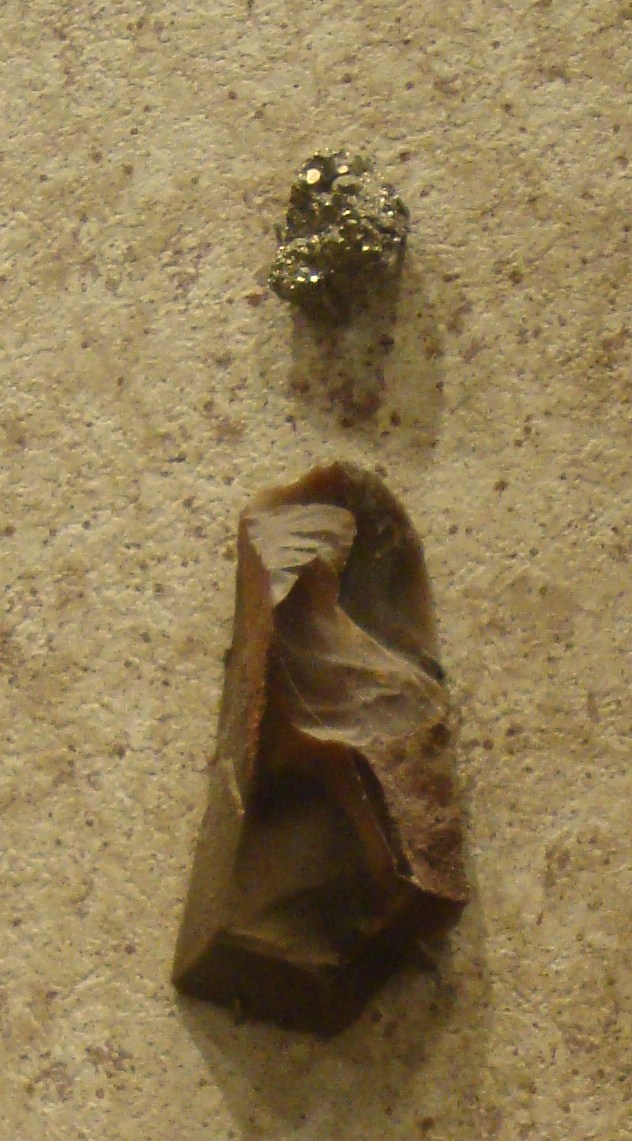
Flint and Iron Pyrite |


Spark:
     Spark can be achieved by striking iron against quarts stone.  In the wild of a fallen civilization  an old nail and a piece of flint will work.  Today, however we are blessed to be able to purchase and store magnesium fire strikers to make a lot of reliable spark.  Strike two pieces together over a bundle of dry tinder, blow smoking sparks into flame and add fuel to grow the fire!  


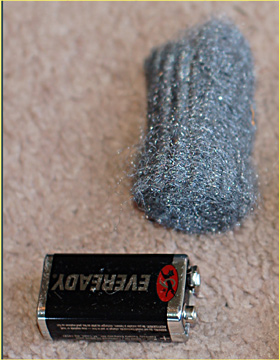
     If you have none of these things you can make spark with a battery and some wire or steel wool.  A copper wire, conducts electricity.  Strip out some wire at the ends, from a disabled vehicle or other machine not in use, place tinder bundle near the red or 'hot' terminal.  Wrap wire with copper exposed to the ground (black) terminal) and, holding the insulated portion of the wire, tap the hot terminal.  Just tap it and see where the sparks fly.  Catch them with the tinder.  Steel wool will ignite when tapped with a nine volt battery.  A little steel wool and a battery are compact and easier to carry than a car battery for fire making.  You could also invest in a solar charger and a dew rechargeable batteries.  Wikihow shows us a battery and a paperclip for sparking.

     Lucky for you if you stocked up on plenty of butane lighters or have a collection of Zippos, as I have.  Never throw away those lighters when you are out of fuel.  The flints will continue to spark for some time after the fuel is gone.  

     So, now we have fuel, spark and friction, oxygen and knowledge.  Continue to fan the flames of your small fire as you add larger fuel.  When the straw catches fire, add sticks.  Fan the flames then add larger sticks.  By this time you can add small branches as needed.  When the cooking is done, add a log to keep the fire or heat going through the night.  

     For years I have struggled with the men in my life thinking they had to create a wall of fire at the campsite.  You cannot cook over roaring flames.  We cook over coals and flames that do not lick the top of the pot.  This pot is too hot!  Fire safety and starting small for cooking is best.  You can even toast marshmallows over such a small safe flame.  So, try to start a fire, out of doors.  Get your fire skills practiced and be safe.